By Michael O'Connor, England Athletics Coach | Marathon Runner | Ironman Finisher
I've been running since my thirties. But if I'm honest, it wasn't until my fifties that I truly figured out how to do it properly.
This is that story — and the lessons I think every runner in their 40s and 50s needs to hear.
My 40s: Building the Base
In my forties I was doing everything. Marathons. Ironman training. Swimming. Cross training. I was putting in the hours and I was consistent enough — but I wasn't breaking personal bests. I wasn't hitting the times I knew I was capable of.
Looking back, I was training hard but not training smart. I had the engine. I didn't yet have the blueprint.
The one thing I did right in my forties — and I'd tell every master runner this — was strength training. I was doing it alongside my running and triathlon training, and I genuinely believe it's the reason I arrived in my fifties in good enough shape to do what came next. If you're in your forties and you're not strength training, start now. Not next month. Now.
My 50s: When Everything Changed
When I hit my fifties I made a decision. I was going to stop being a decent runner and start being the best runner I could possibly be at this age. I went all in on marathons. I wanted to go sub three hours.
I didn't get there — yet. But what I achieved instead told me everything I needed to know about what's possible in your fifties.
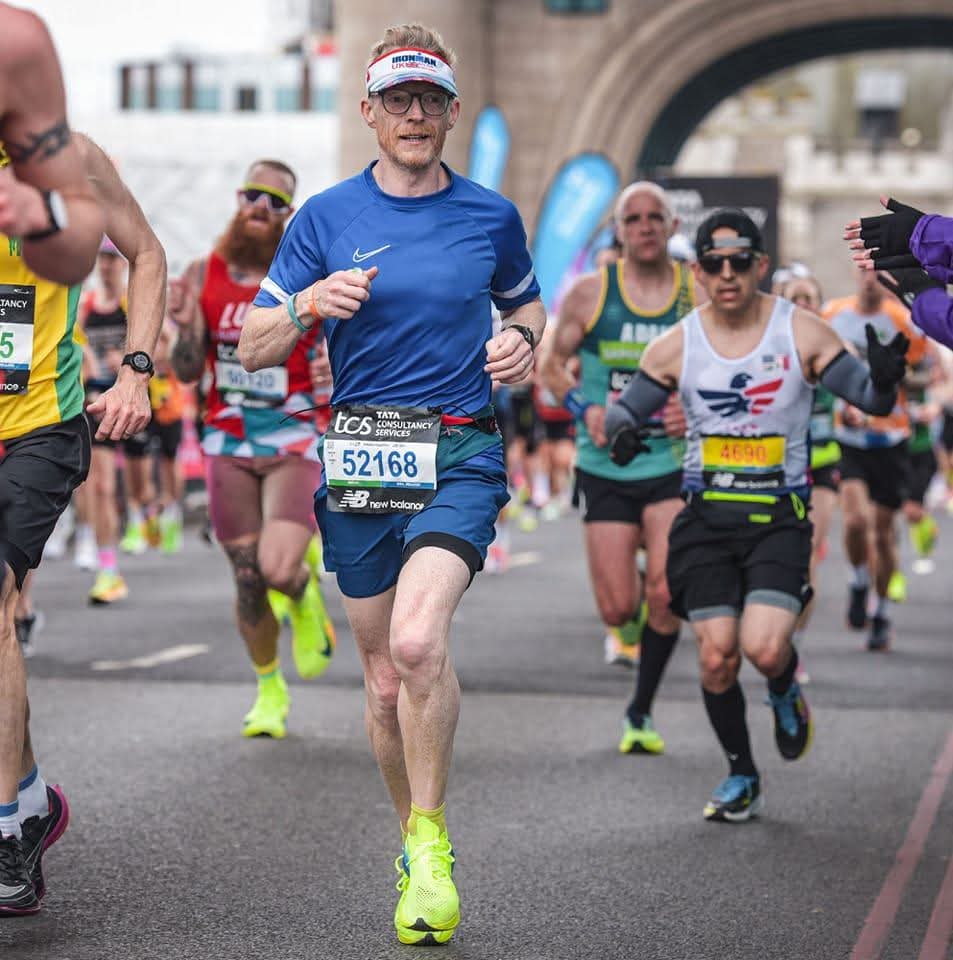
My best marathon was 3:08 at London. I'd run a bang on target time at a tune-up race six weeks before, but picked up a minor illness in the lead-up and it cost me a few minutes on race day. That's running. But 3:08 at my age, on that course, on that day — I'll take it.
The same training block delivered the numbers below.
That result told me everything I needed to know about what's possible in your fifties. First place in age category at a half marathon. Not just finishing. Winning my age group. If that doesn't prove the ceiling is higher than most people think, I don't know what does.
The Blueprint: What Actually Worked
Here's the thing about all of those results — none of them happened by accident. I built a structured 16-week training plan and I followed it properly. Here's what it looked like and why it worked.
Consistency Above Everything
I'll say this once and I'll say it loudly: consistency is the single most important thing. Not the perfect session. Not the best shoe. Not the magic nutrition product. Consistency.
Week after week, month after month, hitting your sessions and building the plan — that's what delivers results. One great week surrounded by three average ones doesn't move the needle. Twelve consecutive solid weeks does.
The 16-Week Plan Structure
My plan was built around a clear weekly structure with nothing left to chance:
Strength training — twice a week. Push sessions and pull sessions, working both legs and upper body. This wasn't just for injury prevention — it was a fundamental part of my running performance. Stronger legs hold form later in a marathon. Stronger arms keep your posture when you're tired. Don't skip it.
Track sessions — timed to the second. Everything was timed. Every rep, every split, every recovery. I wasn't just running fast — I was hitting specific times that corresponded to my target marathon pace. If you can't hit your goal pace in a track session when you're fresh, you won't hit it at mile 22.
Tempo sessions — goal pace practice. Tempo runs weren't just about feeling comfortably hard. They were about rehearsing the pace I needed to race at. Every tempo session had a purpose and a target.
The Saturday parkrun push. Every Saturday I'd run to parkrun, race it hard, and treat it as a quality session. That's the push — getting the legs working at pace.
The Sunday long run — on tired legs. Then on Sunday, straight after that Saturday effort, I'd do my long run. Tired legs. That's intentional. Running long on tired legs teaches your body to hold pace when it's fatigued — exactly what you need in the back half of a marathon. Within those long runs I'd split the session: half at marathon pace, half at easier effort. That combination builds both endurance and race-specific fitness.
Peak weeks — hitting every split. As I moved into the peak weeks of training, everything had to land. Track splits, tempo times, marathon pace miles within the long run. If I was consistently hitting those numbers, I knew race day fitness was there.
Nutrition — Practice, Practice, Practice
I can't stress this enough. Your race day nutrition strategy should not be something you figure out on race day. By the time I got to London, I had practised my nutrition plan on every long run. I knew exactly what I was taking, when I was taking it, and how my body would respond.
Get this wrong and it doesn't matter how fit you are. Practice your nutrition. Every long run is a rehearsal.
What Running in Your 50s Actually Requires
Based on everything I've learned — from coaching, from competing, and from getting it wrong before I got it right — here's what I believe masters runners genuinely need:
1. A proper plan
Not a generic plan downloaded from the internet. A structured plan that accounts for your age, your recovery rate, and your specific goals. Know what every week is building towards.
2. Consistency
Show up. Week after week. Even when it's raining in Greater Manchester and you don't fancy it. The runners who hit their goals are the ones who rarely miss sessions.
3. Strength training
Two days a week. Legs and upper body. Non-negotiable.
4. Timed, purposeful sessions
Easy runs are easy. Hard sessions have target times and you hit them. No session is just "going for a run" — every session has a purpose.
5. Nutrition sorted before race day
Practice in training. Know your fuelling strategy inside out.
6. Weekly check-ins with yourself
Every week I was assessing where I was. Am I hitting my splits? Am I recovering between sessions? Am I on track? Being honest with yourself week by week means you can adjust before problems compound.
7. The right shoes
This matters more as you get older. I rotate between pairs for every training block and I'm deliberate about what shoe goes on for what session.
You're Not Past It
If you're in your forties or fifties and you think your best running is behind you — I'm here to tell you it might not be. Sub 19 parkrun. Sub 38 10K. 1:23 half. 3:08 marathon. All of those came in my fifties. All of them came from a plan, from consistency, and from finally training the way my body needed me to train.
The question isn't whether it's possible. The question is whether you're willing to be consistent and patient enough to let it happen.
Not Sure Where to Start With Your Kit?
One of the easiest things you can control is making sure you're in the right shoes for your training. Stride's AI will find the right shoe for you in under a minute — based on your goals, your mileage, your gait, and where you're running.
Find my perfect running shoe →Michael O'Connor is an England Athletics qualified coach based in Greater Manchester. A marathon runner, Ironman finisher, and masters athlete still competing and setting PBs in his fifties.