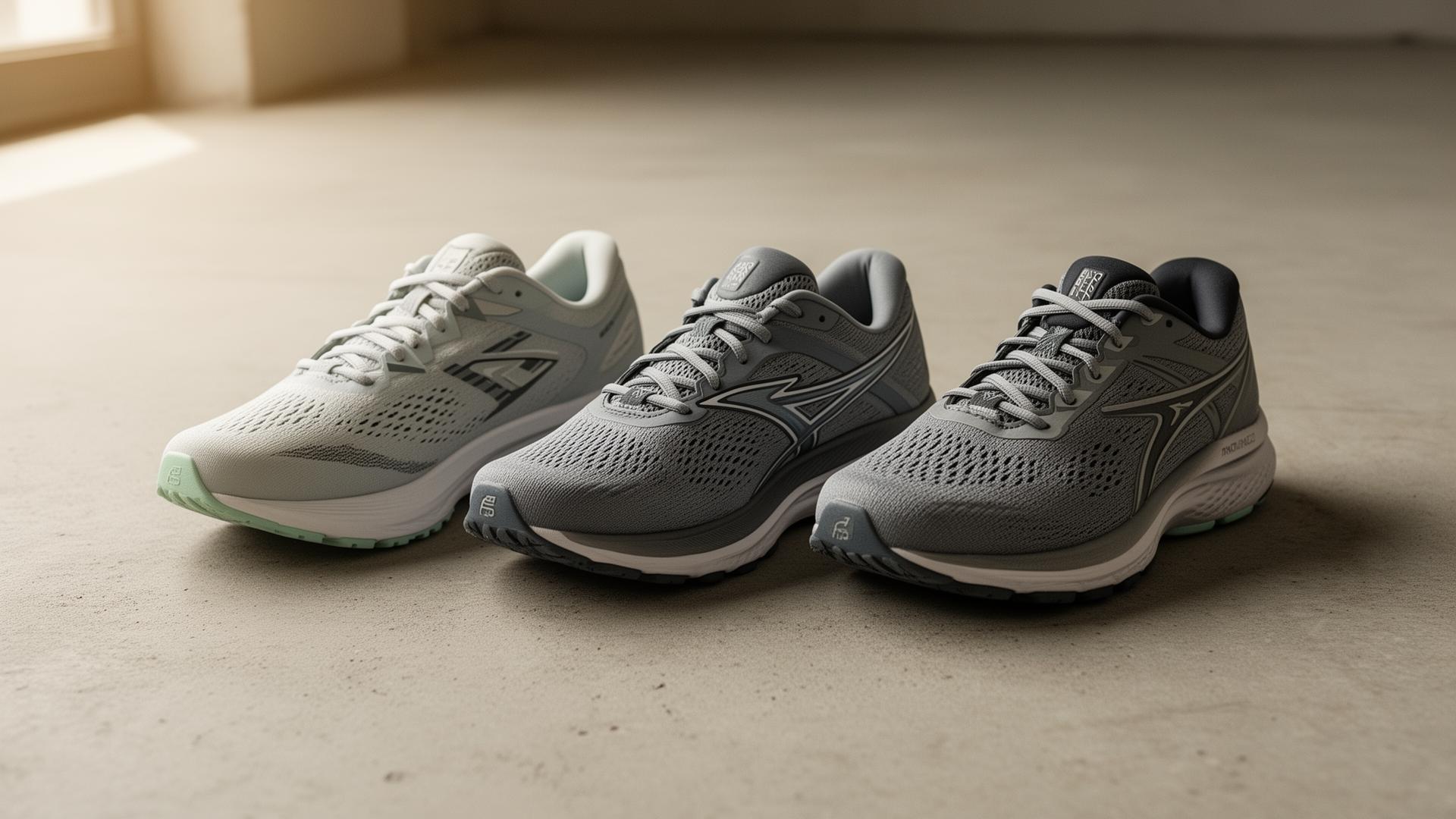
If you're training in one pair of running shoes, you're leaving performance on the table — and probably increasing your injury risk without realising it.
As a coach I see it constantly. A runner picks up a pair they love, wears them for every session from easy recovery jog to Sunday long run to Tuesday track night, wonders why their shins are complaining by week six, and puts it down to overtraining. Sometimes it is overtraining. But often the shoes are a big part of the story.
Building a shoe rotation isn't a luxury reserved for elite athletes. It's one of the most practical, evidence-backed things any runner can do — and it doesn't have to cost a fortune.
Here's how to do it properly.
Why Rotate? The Science Is Clear
A landmark 2015 study published in the Scandinavian Journal of Medicine and Science in Sports tracked 264 recreational runners over 22 weeks. Runners who rotated between multiple pairs of shoes had a 39% lower risk of running-related injury compared to those who ran in a single pair. That's a significant number for something as simple as owning more than one pair.
There are two main reasons rotation works:
1. Midsole foam needs time to recover
Every run compresses the foam in your midsole. After a hard session that foam needs 24–48 hours to fully decompress and regain its cushioning and energy return properties. If you run in the same shoe back to back, you're running on compressed, less responsive foam — especially problematic if you're doing doubles or running on consecutive days.
2. Different shoes load your body differently
Every shoe has a slightly different heel-to-toe drop, stack height, midsole stiffness, and geometry. Rotating between shoes with different characteristics subtly varies the stress on your muscles, tendons, and joints. Repetitive loading — the same force, same angle, same tissue, day after day — is how overuse injuries develop. Variation is protection.
How Many Pairs Do You Actually Need?
The honest answer: two is plenty to start. Three gives you a proper system. More than that is personal preference.
Here's how I break it down with the athletes I coach:
The Two-Shoe Starter Rotation
Pair 1: Daily Trainer
Your workhorse. A cushioned, durable neutral shoe for easy runs, long runs and recovery days. This shoe does the majority of your weekly mileage — around 60–70%. It needs to be comfortable enough to wear tired, on a rainy Tuesday evening when you really don't fancy it.
Pair 2: Tempo / Performance Shoe
A lighter, more responsive shoe for your faster sessions — intervals, tempo runs, parkrun, and races up to half marathon. It doesn't need to be a full carbon plate super shoe (though it can be). Even a lightweight trainer with a more propulsive midsole makes a noticeable difference on quality sessions.
This two-shoe system alone gets you most of the injury prevention benefit and adds genuine performance on your faster days.
The Three-Shoe System (Recommended for Half Marathon and Marathon Runners)
Pair 1: Daily Trainer — Easy runs, recovery runs, general mileage days
Pair 2: Performance Trainer — Tempo runs, intervals, track sessions, shorter races
Pair 3: Race Day / Long Run Shoe — Your carbon plate super shoe or plush long run shoe for your longest efforts and race day
The third shoe is where it gets interesting.
For marathon runners especially, I'd recommend either:
- A carbon plate race shoe (Nike Vaporfly, Adidas Adizero Adios Pro, Saucony Endorphin Elite) kept fresh for race day and key long runs
- Or a max cushion plush trainer (Hoka Clifton, Brooks Glycerin, Saucony Triumph) for your longest easy efforts where comfort and joint protection over distance matters more than pace
Matching Shoes to Session Types
Here's how I'd map a typical training week across a three-shoe rotation:
| Session Type | Recommended Shoe |
|---|---|
| Easy / recovery run | Daily trainer |
| Long run (easy pace) | Daily trainer or max cushion |
| Tempo / threshold run | Performance trainer |
| Interval / track session | Performance trainer |
| Parkrun / 5K race | Performance trainer or super shoe |
| 10K race | Performance trainer or super shoe |
| Half marathon race | Super shoe |
| Marathon race | Super shoe (kept fresh) |
| Back-to-back weekend runs | Alternate between daily trainer and max cushion |
What to Look for in Each Rotation Slot
Daily Trainer
- Cushioning: Medium to high stack — you want protection over many miles
- Drop: 8–10mm suits most heel strikers; 4–6mm for midfoot strikers
- Durability: Look for carbon rubber outsole patches in high-wear areas
- Weight: 270–310g is typical — comfort over speed here
- Good options in 2026: Brooks Ghost 18, ASICS Gel Cumulus 28, Nike Pegasus 42, Saucony Ride 18
Performance Trainer
- Weight: Under 250g — you'll feel the difference immediately
- Foam: Look for high energy return foams (ZoomX, PWRRUN PB, FF BLAST TURBO)
- Drop: Usually lower — 4–8mm encourages a more forward landing
- Plate: Optional — a nylon plate adds propulsion without full carbon stiffness
- Good options in 2026: Nike Pegasus Plus, Saucony Kinvara 15, ASICS Novablast 6, New Balance FuelCell Rebel v4
Race Day / Super Shoe
- Carbon plate: Full-length carbon for maximum energy return
- Stack height: High stack + carbon = the hallmark of modern super shoes
- Mileage limit: Keep these fresh — don't use them for regular training
- Good options in 2026: Nike Vaporfly 3, Saucony Endorphin Elite 3, Adidas Adizero Adios Pro 4, ASICS Metaspeed Sky Paris
Practical Tips from Coaching Experience
Track your mileage on each pair
Most running apps (Strava, Garmin Connect) let you assign shoes to runs. Use it. Most running shoes last 300–500 miles — rotating three pairs means each pair accumulates miles more slowly, extending their overall lifespan. Three pairs used smartly often outlasts buying three pairs sequentially.
Don't rotate randomly
The point of rotation is purposeful variation, not just owning several pairs and grabbing whichever is nearest. Be intentional — decide before each run which shoe fits the session.
Keep race shoes genuinely fresh
I see runners burn through their carbon shoes on every long training run then wonder why they don't feel magic on race day. A super shoe is at its best in the first 80–100 miles. Save them for your longest training runs and race day itself.
Vary your drop gradually
If your daily trainer has a 10mm drop and you want to introduce a 4mm performance shoe, don't go straight to using the flatter shoe for long sessions. Start with shorter, faster runs and let your calves and Achilles adapt over several weeks.
Old shoes aren't dead shoes
When a shoe retires from hard sessions it often still has life in it for easy recovery runs or gym sessions. A shoe that's lost its cushioning for a 15-mile long run may still be perfectly fine for a 3-mile recovery jog. Stack your rotation accordingly.
Wet weather matters in the UK
This is practical advice nobody mentions enough: rotating shoes means you're never putting on still-damp shoes from yesterday's run. Wet foam is compressed foam, and wet shoes increase blister risk significantly. In a British winter especially, having a second pair you can switch to while the first dries out is worth it on its own.
Building Your Rotation on a Budget
You don't need to buy three pairs at once. Build it gradually:
- Start with your daily trainer — this is your foundation
- Add a performance shoe when you're ready to start speed work or racing
- Add a race shoe when you're targeting a specific event and are ready to invest in it
Also worth knowing: last season's models often drop significantly in price when new versions arrive. The Brooks Ghost 17, Nike Pegasus 41 or ASICS Nimbus 27 are all still excellent shoes — often available at 30–40% off once version 18, 42 or 28 land on shelves.
Not sure which shoes to put in your rotation?
Answer a few quick questions and our AI will recommend the right shoe for every slot — daily trainer, performance shoe and race day weapon.
Build my rotation →Michael O'Connor is an England Athletics qualified coach, marathoner and Ironman finisher. He coaches endurance athletes and founded Stride to bring personalised shoe advice to every runner.